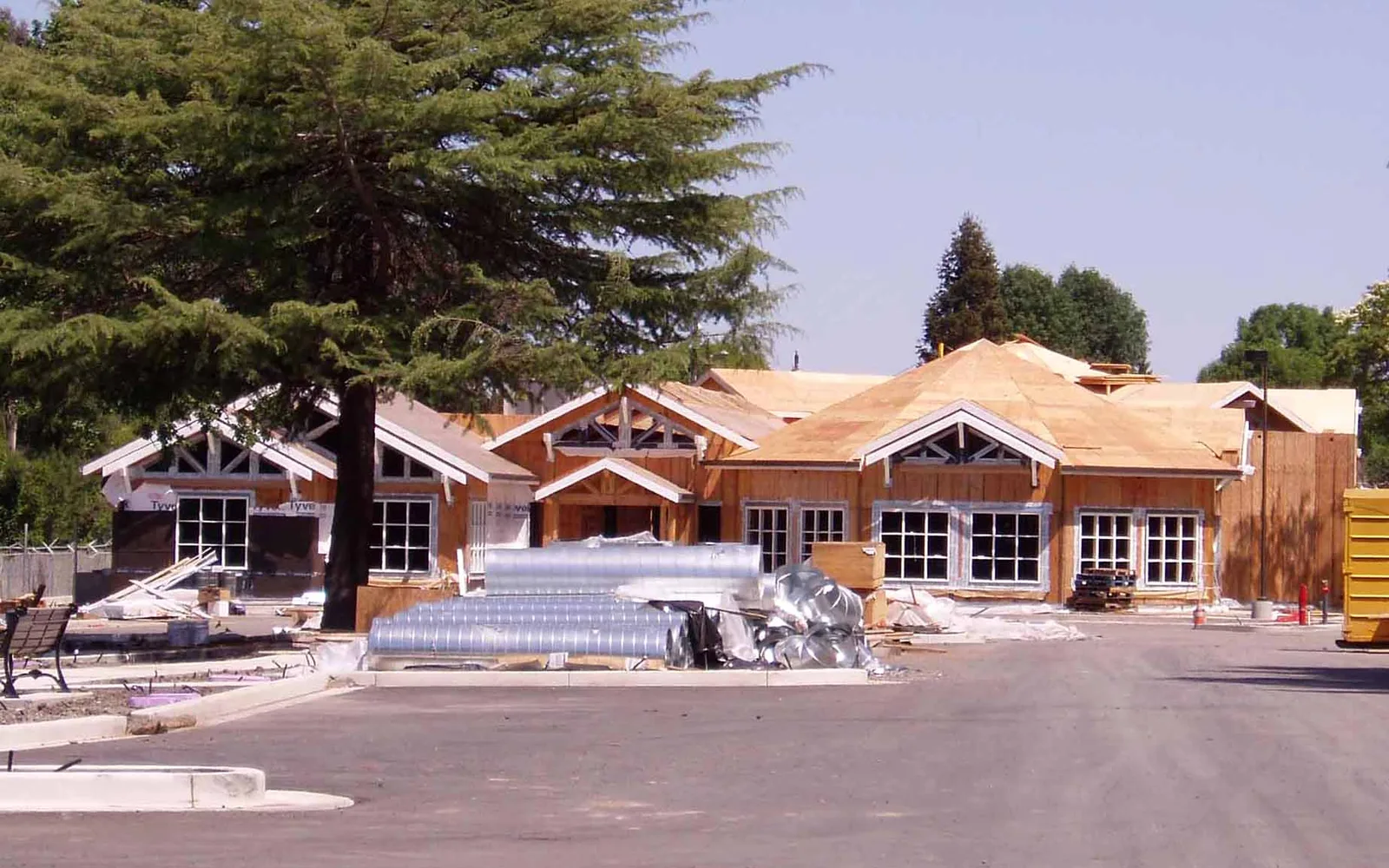
The exposed framing in a May 2012 photograph marks a generational handoff in Pleasant Hill recreation. A senior center had operated beside Pleasant Hill Park since 1973, but residents later voted to replace aging district facilities. The new building was not simply a larger room for the same schedule. Its design created several kinds of gathering space for programs, meals, classes, dancing, and community rentals.
Recreation institutions arrive before the modern facility
Pleasant Hill's recreation district traces its roots to a grassroots council formed by parents and a school principal in 1949. Voters created the park, recreation, and parkway district in January 1951, before Pleasant Hill incorporated as a city. The district bought its first park parcel in 1952, began park construction in 1954, and opened a pool complex two years later.
The first Pleasant Hill Community Center and Senior Center both opened in 1973. After decades of use, the district presented voters with a facilities program. Measure E passed in 2009, authorizing a $28 million general-obligation bond dedicated to rebuilding the senior and community centers, constructing a teen center, and upgrading Pleasant Oaks Park. The photographed construction is a direct record of that public decision becoming a building.
Different rooms support different scales of community
The completed Senior Center contains about 23,000 square feet within Pleasant Hill Park. Its large multi-use room seats as many as 255 people. A dance studio and three smaller meeting rooms allow activities to run without requiring the largest hall, while a commercial kitchen supports meals and events. Windows in the Chateau Room look toward the park's mature landscape.
Current programs focus on adults age fifty and older, but the facility can also be rented when scheduled activities are not using it. The dining room accommodates smaller gatherings and has access to a kitchenette; classrooms serve groups of up to fifty. That range matters because a public center works best when a class, conversation, celebration, and large assembly do not all need the same physical setting.
Record access features and rebuild details accurately
A Pleasant Hill homeowner planning for later life should give an insurer current property facts, including construction, roof, foundation, square footage, utilities, occupancy, and permitted alterations. Document ramps, railings, lifts, widened openings, generators, or other accessibility and resilience work with photographs, permits, and invoices. Ask how specialized equipment is categorized and whether its replacement value belongs under dwelling, other structures, or personal property coverage.
Review deductibles, liability, loss of use, ordinance-or-law provisions, water limitations, exclusions, and inspection conditions across comparable quotes. Discuss household occupancy and any paid caregiving or business activity truthfully because those details can affect underwriting. The Senior Center illustrates public investment in shared services; it does not substitute for household planning. Coverage is controlled by the issued declarations, policy forms, limits, and endorsements.